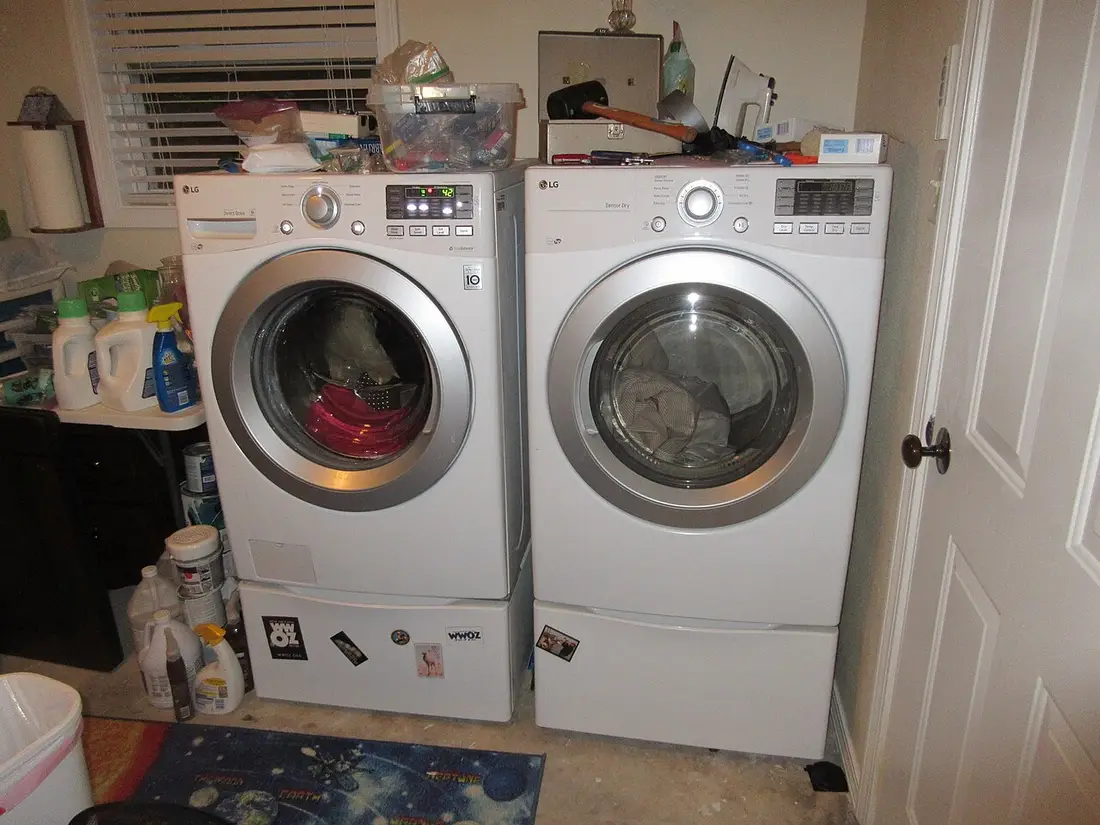
Dryer Not Heating or Taking Too Long: The Vent-First Guide
Read the vent before the dryer: restricted airflow causes more dryer faults - including dead elements and fuses - than any part inside the cabinet.
Read the vent before the dryer: restricted airflow causes more dryer faults - including dead elements and fuses - than any part inside the cabinet.
A dryer that stopped heating after running hot is usually reporting a thermal fuse that opened against an overheating machine.
The outside vent hood tells the truth in ten seconds: while the dryer runs, its flap should be lifted by a strong, warm outflow.
Every dryer complaint is an airflow complaint until proven otherwise, and this guide is organized by that conviction. It starts outside your house at the vent hood, walks the air's whole path to the drum, and only then opens the cabinet to the heat chain - element, thermostats, fuse - whose failures are so often the vent's downstream news. Tulsa's long vent runs and roof caps make the lesson local.
The Tulsa Angle
Heat is the second fact. A refrigerator in a Tulsa garage in July is working against air that can sit over a hundred degrees, and even kitchen units run longer cycles through the summer. Compressors, condenser fans and door seals age on summer's schedule here, and the ice maker - asked for its heaviest production exactly when the machine is hottest - is usually the first component to complain.
The Ten-Second Test at the Vent Hood
Start the dryer on a heated cycle and go outside to the vent hood. A healthy vent announces itself: the flap lifted wide, a strong warm outflow you can feel a foot away, the smell of laundry weather. A restricted vent whispers - a barely stirring flap, a weak warm breath, lint furred around the hood's edges like a beard. That ten-second observation divides the dryer world: machines suffocating on their own exhaust, and machines whose fault honestly lives inside.
While you are there, learn your vent's biography: where it exits, how far it travels, how many turns it takes, whether it climbs to a roof cap. Length and turns are resistance, and resistance is what lint colonizes. The households that know their vent's route are the ones whose dryers live longest, because they know what 'clean the vent' actually has to mean for their house.
How a Blocked Vent Kills Parts
A dryer that cannot exhale runs hot inside its own cabinet. The cycling thermostat responds by cutting the element early and often, so drying slows; temperatures at the safety devices climb until a thermal fuse - a one-time device with no reset - opens and the heat stops entirely. Read in that order, the classic Tulsa sequence writes itself: dry times creep for a season, the machine runs unusually hot one month, and then one day the drum turns in cold air and the fuse's message is delivered.
This is why replacing a fuse or an element without clearing the vent is a subscription, not a repair. The new part inherits the same trapped heat and fails on the same schedule, sometimes faster. The vent-first discipline is not a preference; it is the mechanism of the failure, read in order, and any visit that begins at the element owes you an explanation of the vent's condition before it ends.
The Heat Chain, Link by Link
When the vent is proven clear, the heat chain is tested as a chain. On an electric dryer: the element itself, which can open entirely or lose a section and heat weakly; the high-limit and cycling thermostats that govern it; the thermal fuse that guards it; and the supply - a dryer can lose one leg of its power and keep its motor while its element starves, a Tulsa specialty after panel and storm troubles. On a gas dryer, the chain wears different clothes: an igniter that glows, a sensor that watches it, and valve coils that famously heat at first and fail as they warm, so the dryer starts hot and finishes cold.
Each link has a test and a signature, and the visit works them in sequence rather than by hunch. The owner's contribution is the timeline: when the times began creeping, whether the cold arrived suddenly or by degrees, whether the machine ran hot to the touch in its last heated weeks. That timeline, honestly reported, is worth a shelf of guessed parts.
Step by Step
Do the vent hood test
Heated cycle running, go outside: flap lifted? Outflow strong and warm? Lint bearded around the hood? Write down what you find.
Clean the lint screen and check its film
A screen filmed by dryer-sheet residue looks clean and breathes badly; hold it under a tap - water should pass freely. Wash it if it beads.
Look behind the machine, gently
Without crushing anything further, check whether the transition duct is kinked or crushed where the dryer was pushed back, and whether it has parted from the wall entirely.
Note the heat pattern
No heat at all, weak heat, or heat that starts and fades - plus whether the cabinet has been running hot. The pattern separates fuse, element and coils before a meter comes out.
Stop if the story smells
Burning smell, a cabinet too hot to rest a hand on, or a breaker involved: unplug the machine and let the visit start from safety.
Call with the vent's report and the heat's pattern
Those two observations route the visit to the right end of the machine - and they make its first half hour twice as productive.
Prevention and Good Habits
Clean the lint screen every load, and wash it when dryer sheets film it - the screen is the vent's first foot.
Clean the lint screen every load, and wash it when dryer sheets film it - the screen is the vent's first foot.
Have the whole vent run cleaned on the rhythm its length and route set; long and roof-bound runs in Tulsa homes need it most and get it least.
Have the whole vent run cleaned on the rhythm its length and route set; long and roof-bound runs in Tulsa homes need it most and get it least.
Keep the outside hood clear of lint, nests, mulch and snow, and confirm its flap moves freely.
Keep the outside hood clear of lint, nests, mulch and snow, and confirm its flap moves freely.
Push the dryer back like the duct matters - because a crushed transition duct is the most common restriction in the metro.
Push the dryer back like the duct matters - because a crushed transition duct is the most common restriction in the metro.
Track dry times the way you track a car's fuel use: the creep is the message, and it arrives months before the fuse does.
Track dry times the way you track a car's fuel use: the creep is the message, and it arrives months before the fuse does.
Dry loads of similar weight together so the sensor and the timer judge an honest load.
Dry loads of similar weight together so the sensor and the timer judge an honest load.
Reading a Vent's Condition Without Tools
Beyond the hood test, the vent confesses at its joints: dust furred at a seam means air - and lint - escaping under pressure; a transition duct warm in patches and cool in others suggests where the flow slows; a roof cap's screen (an addition many well-meant hands have made) collects lint into a felt that no flap test fully reveals. Walk the route with your hands and eyes once a year and the vent stops being an abstraction with a cleaning interval and becomes a piece of plumbing you actually know.
The dryer itself reports, too. A cabinet top too hot to rest a hand on, a laundry room that turns humid and linty during cycles, clothes emerging with a baked smell - each is trapped exhaust announcing its address. Owners normalize these signs across a season; written down with dates, they form the timeline that makes the eventual visit short and certain.
Electric Versus Gas: Two Ways to Lose Heat
The electric dryer's heat is a coil and its court of thermostats; the gas dryer's is a small furnace with an igniter, a flame sensor and valve coils. Their failures rhyme - both lose heat to safety devices reacting to heat that cannot leave - but their signatures differ: the electric machine more often dies outright or limps on half an element; the gas machine performs its fade in and out across a single load as its coils warm. Knowing which machine you own changes what you listen for, and your report to the visit gains a whole diagnostic dimension.
One shared rule survives the difference: neither machine's safety devices are decorative. A fuse or limit that opened did so against a temperature it was built to refuse. The vent, the duct and the lint load are therefore part of every heat repair's evidence, whichever fuel your dryer burns.
Myth vs Fact
The Myth
- If the dryer tumbles, the vent cannot be badly blocked - the air must be going somewhere.
- A thermal fuse that opens once was simply defective and a like-for-like swap closes the case.
- Longer dry times are just what an aging dryer does, not a symptom worth reporting.
The Fact
- A tumbling drum proves only the motor; the exhaust can be nearly sealed while the drum turns happily.
- Thermal fuses are one-time witnesses to overheating; their testimony is about airflow or control, not about themselves.
- Dry-time creep is the vent's earliest report and arrives months before parts begin to fail from the trapped heat.
Field Checklist
Vent hood test done
flap position, outflow strength, lint at the hood
Your vent's route known
exit point, length, turns, roof or wall cap
Lint screen washed if water beads on it instead of passing
Transition duct checked for crushing or detachment behind the machine
Heat pattern classified
none, weak, or starts-hot-then-fades
Cabinet heat and laundry-room humidity during cycles noted
Dry-time creep estimated against the machine's first year
Any burning smell treated as a stop sign, machine unplugged
What a Good Diagnosis Report Includes
The owner's scope in a heat case is the airflow's whole biography - hood, screen, duct, route - plus disciplined observation of the heat pattern. The cabinet's interior, where the element, thermostats and fuse live among live terminals and a one-time safety device's testimony, is the visit's scope. That division is not timidity: the vent evidence determines what the interior work must prove, and gathering it first is what turns an open-ended hunt into a sequence of tests.
Gas dryers narrow the owner's scope further and rightly: anything past the igniter's glow - valves, coils, flame behavior - belongs to professionals with the instruments and the licensing. Watch, time, note and report; the gas chain rewards exactly that and punishes everything else.
The Professional Standard
The heat professional starts outdoors. The hood test, the route inspection and the transition duct's condition precede every interior test, because the vent's state determines what the interior evidence means. Then the chain is proven link by link with a meter - fuse, limits, element or gas train - and a heat repair is not complete until the airflow that the new parts will live in has been verified. The final act is a full heated cycle witnessed to its end, not a momentary glow.
Mistakes That Cost Homeowners
Replacing a thermal fuse without clearing the vent - installing a messenger for the same message.
Judging a gas igniter by its glow instead of its draw, or the coils by the first five minutes of a cycle.
Testing the element, finding it whole, and stopping - while the vent's restriction waits to spend the next fuse.
Leaving without telling the owner their vent's route and its cleaning rhythm, the two facts that decide the repair's lifespan.
Prove the air's road before judging the heat's chain, and the dryer stops being a mystery with a drum. The vent wrote most of the fault; let it be read first, and let the parts be accused only on evidence.
Questions This Guide Answers
My dryer stopped heating right after a period of very long dry times. Coincidence?
It is the classic sequence, not a coincidence. The long times were the vent narrowing; the heat's death was the thermal fuse opening against the trapped heat, or the element failing under it. The repair therefore has two halves: restore the heat chain, and clear the vent that spent it. A repair that does only the first half has a sequel already scheduled.
Can I replace the thermal fuse myself and skip the rest?
The fuse is the message, not the fault. Replacing it without finding why it opened - vent, thermostat, element behavior - installs a fresh messenger for the same news, and the interval shortens. It also involves the cabinet's interior and the machine's safety logic. The honest shortcut is the vent hood test and a clear vent; the fuse belongs to the visit that verifies the whole chain.
Why does my gas dryer start hot and then go cold?
That rhythm is the gas valve coils' signature: they open the valve when cool, weaken as they warm, and let it close mid-cycle, so the dryer heats at the start of a load and tumbles cold by the end. It is a diagnosis the timeline nearly makes by itself - which is why reporting when the heat fades matters more than reporting that it does.
What cleaning schedule should a Tulsa dryer vent be on?
By route, not by year alone: a short, straight wall vent in a small household asks the least; a long run, a roof cap or a big family's production asks the most. The practical gauges are rising dry times and a weak showing at the hood test. When either speaks, the vent is due - the calendar's opinion is secondary.
Fridge Warming Up, Washer Down or Oven Out Before Dinner?
One call connects you with an appliance repair professional serving Tulsa and the surrounding Green Country communities - refrigerator, washer, dryer, oven, dishwasher and more.
📞 Call Now