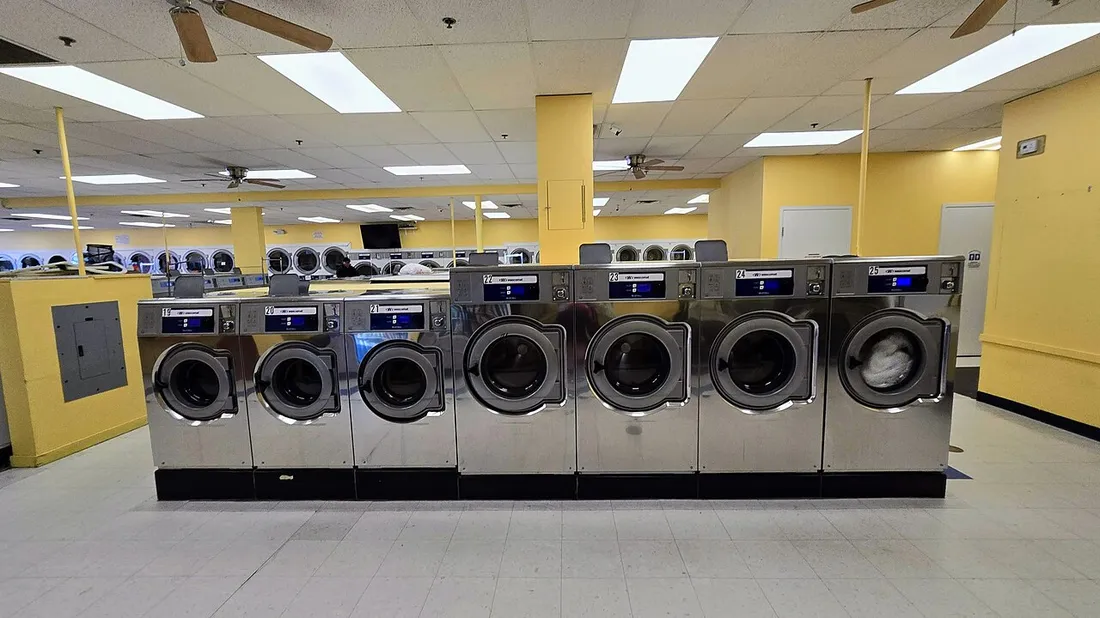
Washer Not Draining or Spinning: A Tulsa Troubleshooting Guide
A washer that will not drain is stopped at one of three addresses: the pump filter and pump, the hose, or the house drain beyond it.
A washer that will not drain is stopped at one of three addresses: the pump filter and pump, the hose, or the house drain beyond it.
A washer that drains but will not spin is telling a different story - switches, belt or drive, or bearings - and the sound separates them.
Note the error code and where the cycle stopped before you touch anything; that pair is the diagnosis's first page.
There are two washer complaints that sound alike and are not: the machine that will not drain, standing full of grey water and wet clothes, and the machine that drains but will not spin, leaving the load wrung by nothing but disappointment. This guide works both, in the order the water and the drum demand, and marks the line where a homeowner's checks end and the visit begins.
The Tulsa Angle
Heat is the second fact. A refrigerator in a Tulsa garage in July is working against air that can sit over a hundred degrees, and even kitchen units run longer cycles through the summer. Compressors, condenser fans and door seals age on summer's schedule here, and the ice maker - asked for its heaviest production exactly when the machine is hottest - is usually the first component to complain.
The Drain Path, in Three Parts
Every load ends the same way: several gallons of dirty water, pushed by a small pump through a hose into the house drain, quickly. The path fails at one of its three addresses. The first is inside the machine: the pump filter - on front-loaders, an owner-serviceable trap behind a small door - and the pump itself, whose diet of lint, coins and hairpins is the laundry room's lost-property office. The second is the hose: kinked by a machine pushed back too firmly, or narrowed by years of residue. The third is the house's own drain, whose slowness the washer reports faithfully while taking the blame.
The evidence sorts the addresses quickly. A machine that hums at drain time and moves no water has a pump story. One that drains slowly but completely has a narrows story - filter, hose or house drain. One that drains happily into a standpipe that overflows has a house story wearing the washer's name. Each is a different repair, and two of the three are among the gentlest in the trade.
The Spin Story: Switches, Drives and Bearings
A washer protects its spin jealously: it will not spin with the lid or door unproven, the load badly unbalanced, or the tub still holding water. That is why a drain fault presents as a spin fault - the machine refuses to spin a tub it could not empty. Prove drainage first; many 'won't spin' calls end at the pump, with the spin innocent all along.
When drainage is proven and the spin is still absent or weak, the suspects line up by sound. Silence after the drain can be a lid or door switch that no longer reports. A motor's hum without motion is the drive - belt, coupling or motor itself. A spin that starts and gives up, or arrives with a growing roar, is the suspension and bearings filing their notice - the repair conversation that age and load history help decide.
Tulsa's Water at the Inlet
The inlet is the drain story's mirror: screens where the hoses meet the machine, designed as fine mesh, meeting a mineral water supply that crusts them grain by grain. The fill slows across seasons until the machine's pressure logic complains - cycles that stall at the start, fill errors, a washer that seems to have lost interest. The fix, when it is only the screens, is among the smallest in laundry, and the warning is larger than the repair: the same water is at work on the ice maker and the dishwasher.
Hard water's other laundry signature is subtler: detergent underperforms in mineral water, residue builds in the tub and hoses, and the machine's smell arrives. The maintenance answer is the descaling cycle run on the calendar Tulsa's water writes - habitually, not heroically - and it belongs in the same conversation as any drain visit, because residue is part of why drain paths narrow.
Step by Step
Write down the code and the moment
Any displayed code, plus where in the cycle the machine stopped and whether water stands in the tub. Do this before restarting anything.
Bail only if you must, and keep the machine in place
If the door must open, bail the tub by hand rather than dragging a full, connected machine - water, power and supply lines all argue against moving it.
Check the pump filter if your model has an owner's trap
Power off, a shallow pan ready, and the filter turned out slowly - what it holds is the diagnosis in physical form. This is the one interior check many makers intend for owners.
Listen at drain time
A hum with no water movement, a gurgle of partial flow, or silence - each points down the path to a different address.
Straighten what is yours to straighten
A kinked hose visible behind the machine, a standpipe obviously overflowing - note them for the visit rather than dismantling further.
Call with the code, the moment and the sounds
That trio is most of the diagnosis; the visit starts at the right address instead of the front door of the problem.
Prevention and Good Habits
Clean the pump filter on your model's schedule; in busy Tulsa households it is quarterly work that prevents the classic full-tub stop.
Clean the pump filter on your model's schedule; in busy Tulsa households it is quarterly work that prevents the classic full-tub stop.
Check pockets as a liturgy - coins, screws and pins are the pump's predators, and they all entered through a pocket.
Check pockets as a liturgy - coins, screws and pins are the pump's predators, and they all entered through a pocket.
Run a descaling and cleaning cycle monthly; Tulsa's water and detergent residue narrow the drain path together.
Run a descaling and cleaning cycle monthly; Tulsa's water and detergent residue narrow the drain path together.
Balance loads and avoid habitual single-item washes; suspension and bearings wear on the machine's efforts to forgive imbalance.
Balance loads and avoid habitual single-item washes; suspension and bearings wear on the machine's efforts to forgive imbalance.
Leave the door or lid ajar between loads so the tub and boot dry - humidity grows both odor and corrosion.
Leave the door or lid ajar between loads so the tub and boot dry - humidity grows both odor and corrosion.
Replace supply hoses on a multi-year rhythm, and keep the shutoff valves findable and operable.
Replace supply hoses on a multi-year rhythm, and keep the shutoff valves findable and operable.
Front-Load Versus Top-Load: Where the Trap Lives
Most front-load washers keep their pump filter behind a small door low on the front - an owner's trap by design, complete with a little drain tube on many models for emptying the sump into a pan. Top-load machines more often hide their pump's world under the cabinet, making the equivalent checks a visit's work. Know which household you are in before the failure, ideally on a calm Saturday: find the door, read the manual's page, and the eventual full-tub morning becomes an errand instead of an emergency.
The filter's contents, when you meet them, are the machine's lost-property record: coins that survived pockets, hairpins, buttons, the occasional small sock that escaped through the boot's gap. Nothing in the trap condemns the owner; everything in it explains the symptom. Show the visit what you found, or keep it to show - the evidence shortens the conversation.
The House Drain's Turn to Confess
Sometimes the washer is the messenger and the house is the message: a standpipe or drain line narrowing with decades of lint and soap will accept a bath's water happily and balk at a washer's pumped surge. The evidence is theatrical - water rising in the standpipe, spilling at the wall while the machine drains with conviction. Before any washer is condemned for a drainage crime committed downstream, the house's share must be proven, and the proof is usually a bucket, a timer and an honest look at what the drain accepts.
Older Tulsa homes earn attention here: drain lines sized and routed for gentler eras, meeting machines that pump harder than anything they were drawn for. The washer's visit and the drain's are different trades, but the diagnosis has to name which one owns the fault before either is paid to fix the other's.
Myth vs Fact
The Myth
- A washer that will not spin needs a new motor or control board.
- Error codes are sales tools invented to frighten owners into service calls.
- If the machine drains into a bucket test fine, the house drain cannot be the problem.
The Fact
- The spin refusal is usually safety logic obeying a drainage fault - prove the water path first.
- The pump filter's trap exists to be emptied by owners on many models; its calendar is in the manual and the symptom ignores it anyway.
- Hard water narrows the inlet screens on Tulsa's schedule, not the manufacturer's, and a fill fault often introduces a drain fault's investigation.
Field Checklist
Cycle's stopping point and any error code written down before restarting
Water standing in the tub
how much, and how dirty
Pump filter trap located on your model - owner's or visit's territory
Drain-time sound identified
hum, gurgle or silence
Hose checked for kinks where the machine meets the wall
Standpipe watched through a drain
accepting, rising or spilling
Recent pocket harvest considered - coins, screws, pins in the last loads
Inlet fill speed recalled for the hard-water half of the story
What a Good Diagnosis Report Includes
The owner's honest territory in a drainage case is observation plus, on models designed for it, the pump filter trap. Beyond that, the machine's underside holds belts, pumps and wiring that reward training and punish enthusiasm, and the house drain beyond the standpipe is another trade's territory entirely. The scope worth claiming is the evidence: codes, sounds, water levels and the standpipe's behavior. Evidence gathered well is not a half-measure - on drainage calls it is routinely most of the diagnosis.
One boundary deserves its own sentence: never run a washer unattended with a known drainage fault to 'see if it clears'. Water that cannot leave on schedule leaves on its own schedule instead, onto floors that were never part of the appliance budget. Supervised tests only, with the shutoff valves located before the experiment begins.
The Professional Standard
The drainage professional works the path in the water's own order - trap, pump, hose, house - testing each address before accusing the next, because the path's parts all produce the same symptom from different causes. Error codes are read as the machine's testimony, not its verdict; pumps are proven by flow, not by hum. And the house drain is given its chance to confess with a witnessed standpipe test before any machine part is replaced on its behalf.
Mistakes That Cost Homeowners
Replacing a pump that was strangled by a house drain - the new pump inherits the same downstream verdict.
Clearing the trap and closing the case without asking what the pockets of this household keep delivering to it.
Reading a spin refusal as a drive failure before the tub is proven empty.
Ignoring the inlet screens while standing in a hard-water house, and leaving the machine's second water story untold.
Drain first, spin second, house third - the order is the diagnosis. Follow it with a notebook rather than a toolbox and your washer's wettest morning becomes a story with a short final chapter.
Questions This Guide Answers
Why does my washer stop full of water and refuse to spin?
Because it is designed to. The control will not spin a tub it could not empty - the safety logic is sound, and it means a drainage fault almost always presents wearing a spin fault's clothes. The drain path is proven first: filter, pump, hose, house drain. When the water goes, the spin usually returns uninvited, because it was never the problem.
The drain pump hums but no water moves. What does that mean?
The pump is powered and obstructed or worn: something in its impeller - the pocket harvest of coins and pins leads the list - or the pump itself at the end of its strength. Repeated restarts heat the motor without moving water. Note it, stop cycling it, and let the visit clear the trap and test the pump; it is a diagnosis with a short road.
Is a roaring spin cycle a bearing, and is it worth fixing?
A roar that has grown across a season of spins is bearing wear until proven otherwise. Worth is the honest conversation: bearing work is the washer's larger surgery, and its value depends on the machine's age and the rest of its condition. What the sound is not is ignorable - spin forces make bearing damage compound, and the verdict is better reached by diagnosis than by the tub's eventual seizure.
Can I just set the washer to drain and spin again and again?
One retry after checking the filter is reasonable; a ritual of retries is not. A struggling pump overheats, a control logging the same fault gains nothing, and a machine standing full of water is not improved by being asked the same question louder. The retry's job is to confirm the symptom for your notes - then the notes go to the visit.
Fridge Warming Up, Washer Down or Oven Out Before Dinner?
One call connects you with an appliance repair professional serving Tulsa and the surrounding Green Country communities - refrigerator, washer, dryer, oven, dishwasher and more.
📞 Call Now